Projects
My projects and professional R&D activities cover a broad range of academic research, industrial R&D, software and systems engineering, Artificial Intelligence, cloud computing, distributed systems, computer networking, embedded systems, computer hardware engineering, digital signal processing, intelligent transportation systems, technology-development activities, and the evaluation of industrial and institutional R&D programs.
Projects & R&D Activities
R&D Center Evaluator — Ministry of Industry and Technology
Institution: Ministry of Industry and Technology, Ankara
Position: R&D Center Evaluator
Period: July 2026 – Present
Position: R&D Center Evaluator
Period: July 2026 – Present
Key Activities:
- Serving as an evaluator for R&D Centers operating under the supervision and support mechanisms of the Ministry of Industry and Technology.
- Participating in the evaluation of R&D Center activities, projects, organizational structures, technical capabilities, and R&D outputs.
- Reviewing information, reports, evidence, and documentation submitted by R&D Centers as part of periodic evaluation activities.
- Evaluating the progress of activities and assignments defined during commission and evaluation processes and assessing the corresponding work carried out by the R&D Centers.
- Preparing technical assessments and contributing to the Ministry's evaluation processes for supported R&D Centers.
TÜBİTAK-TEYDEB Industrial R&D Projects
Institution: TÜBİTAK-TEYDEB, Ankara
Role: Referee and Inspector for Industry Projects
Period: August 2005 – Present
Role: Referee and Inspector for Industry Projects
Period: August 2005 – Present
I worked as a referee and inspector for industrial R&D projects. My responsibilities included reviewing project proposals, interviewing project teams at their company locations, and preparing reports for TÜBİTAK-TEYDEB funding decisions concerning national and international industrial projects. Companies included Aselsan, Vestel, Beko, Koç.net, Karel, Sampaş, İnnova, ITD, RDlab, Telekurye, Pozitron, and others. As of September 2016, I had served as referee for 44 projects and inspector for 6 projects.
Design and Development of Hardware and Software Frameworks of a Deep Computer for “Artificial Intelligence and Data Science” Fundamental and Research Laboratories
Institution: Istanbul Atlas University, Department of Computer Engineering — BAP Project
Role: Project Manager (no other personnel in the project)
Period: 31 October 2022 – 30 April 2023 (6 months), Budget: 108,965.48 TL
Role: Project Manager (no other personnel in the project)
Period: 31 October 2022 – 30 April 2023 (6 months), Budget: 108,965.48 TL
In order to initiate fundamental and research studies at Istanbul Atlas University in two important areas—Artificial Intelligence and Data Science, and Cloud Computing and Big Data—basic hardware and software infrastructures were designed and developed around an advanced AI workstation, and the necessary Artificial Intelligence software packages and libraries were installed. In addition, seven new courses on Artificial Intelligence were developed and delivered to students in the English-medium Software Engineering undergraduate program and, for one course, the Turkish-medium Computer Engineering undergraduate program, in order to disseminate the knowledge and practical skills gained through the project. A new course titled Artificial Intelligence: Public was also developed and delivered to a large class of 115 students from six departments who did not have a strong background in calculus and computer programming.
Development of a GIS Cloud Infrastructure for Map and Map-Information Generation Using Scaled Panoramic Images (Panoramic Cloud — TÜBİTAK 1507)
Institution: Ankageo, Istanbul
Role: Consultant
Period: January 2018 – October 2018
Role: Consultant
Period: January 2018 – October 2018
Many public and private organizations require field studies to produce spatial data. However, these studies are often costly, and obtaining and reporting the data may require considerable time. The project aimed to reduce field work and achieve savings in both cost and time through the use of 360-degree panoramic imaging, laser systems, and precision positioning technologies. Its objective was to develop a complete system for collecting, processing, and presenting highly accurate spatial data using a panoramic data-collection platform and precision positioning systems. I contributed to the preparation of the TÜBİTAK 1507 proposal. The project was accepted and initiated, and it was organized and managed according to TS ISO/IEC 15504 SPICE Level 2 processes. It was also one of the sample projects used in the accepted KOSGEB-KOBİGEL process-improvement project.
Artificial Intelligence-Based Video Vehicle Detection System (Video Detector)
Institution: Ankageo, Istanbul
Role: Consultant
Period: January 2018 – October 2018
Role: Consultant
Period: January 2018 – October 2018
The project aimed to develop a vehicle-detection system using Artificial Intelligence-based cameras. The system was designed to provide data to existing Traffic Signal Controllers. Using an Artificial Intelligence-based video-sensor system, vehicle-tracking information was to be generated from virtual-loop counting, vehicle presence and absence, occupancy, queue length, average speed, vehicle classification, and intersection-direction information. I contributed to technical and academic literature studies for the ISBAK project and the prospective TÜBİTAK 1507 project. The project was organized and managed according to TS ISO/IEC 15504 SPICE Level 2 processes and was one of the sample projects used in the accepted KOSGEB-KOBİGEL project.
Improvement and Certification of Ankageo Software Development Processes with TS ISO/IEC 15504 SPICE — KOSGEB-KOBİGEL
Institution: Ankageo, Istanbul
Role: Consultant
Period: January 2018 – October 2018
Role: Consultant
Period: January 2018 – October 2018
Software Engineering activities were organized for two projects in order to improve the organization’s Project Management, Support, and Software Engineering processes according to TS ISO/IEC 15504 SPICE. A KOSGEB-KOBİGEL project was prepared and submitted for this purpose, and the project was accepted.
New Generation Management Information System for R&D Centers — Bilimp v2.0 (KOSGEB R&D and Innovation Project)
Institution: Teracity Software Technologies, Bursa
Role: Consultant
Period: March 2017 – November 2017
Role: Consultant
Period: March 2017 – November 2017
The project was prepared, submitted, accepted, and initiated. It was designed to introduce next-generation interactive user-interface functions into an R&D Center management information system, including a 3D talking face, 3D holographic interfaces, a robotic visitor-management system, voice-based work-information input, voice-based user alerts and guidance, and biometric user interfaces such as face recognition. These additions were intended to provide the required input/output functions for a future Artificial Intelligence-based version of the system.
Improvement of Teracity Software Development and Project Management Processes with TS ISO/IEC 15504 SPICE Level 2 — KOSGEB-KOBİGEL
Institution: Teracity Software Technologies, Bursa
Role: Project Manager
Period: November 2016 – November 2017
Role: Project Manager
Period: November 2016 – November 2017
Software Engineering activities were organized for two projects to improve the organization’s Project Management, Support, and Software Engineering processes according to TS ISO/IEC 15504 SPICE. This was a one-year process-improvement project supported by KOSGEB, with the objective of obtaining certification after completing all 15 process requirements for SPICE Level 2. The four-day SPICE assessment was successfully completed, and Teracity received the SPICE certificate in November 2017.
Research Projects at the Networking and Software Engineering (NetSE) Laboratory
Institution: Networking and Software Engineering (NetSE) Laboratory
Role: Principal Investigator and Researcher
Period: September 2002 – July 2016
Role: Principal Investigator and Researcher
Period: September 2002 – July 2016
I worked as principal investigator and researcher at the NetSE Laboratory at three universities beginning in 2002. The NetSE research team’s projects covered cloud computing, data science, distributed systems, mobile and wireless systems, pervasive computing, emerging networking paradigms, and Software Engineering. The outcomes included senior design projects, master’s theses, research projects, academic journal papers, and conference proceedings.
Cloud Computing and Big Data Research Laboratory and National Search Engine Projects
Institution: TÜBİTAK-BİLGEM-BTE, B3Lab
Role: Consultant to the Institute Director and Project Teams
Period: March 2013 – December 2014
Role: Consultant to the Institute Director and Project Teams
Period: March 2013 – December 2014
I consulted the Institute Director and project teams on cloud computing, Software Engineering, and project management at TÜBİTAK-BİLGEM-BTE. The work covered parallel and distributed-system development paradigms and technologies such as the MapReduce programming model, Hadoop and its ecosystem for big-data processing, and search-engine technologies. I conducted research, provided advice, and delivered seminars on problems related to the construction of the national data center and its IaaS and PaaS infrastructures.
TÜBİTAK-TEYDEB-BİLTEG Projects
Institution: TÜBİTAK-TEYDEB, Ankara
Role: Executive Committee Member
Period: June 2012 – June 2014
Role: Executive Committee Member
Period: June 2012 – June 2014
As a member of the TÜBİTAK-TEYDEB-BİLTEG Executive Committee, I participated in evaluating Information Technology projects proposed by companies in Turkey, deciding on project funding, and assigning referees and inspectors from universities and industry to accepted projects. The committee met approximately twice per month and evaluated about 40 projects per month. Approximately 1,000 projects were assessed during the two-year period.
Reorganization of TÜBİTAK-BİLGEM Institutes
Institution: TÜBİTAK-BİLGEM, Gebze, Kocaeli
Role: Consultant to the Institute Director and Technical Teams
Period: January 2012 – February 2013
Role: Consultant to the Institute Director and Technical Teams
Period: January 2012 – February 2013
I consulted Institute Directors and Project Teams on Software Engineering management, R&D organizational structures, and processes suitable for TÜBİTAK-BİLGEM during the reorganization of its institutes. I contributed to identifying approaches for improving product-development processes, interviewed project teams, prepared reports and recommendations for senior management, and developed knowledge-area maps for domain experts in Computer Science, Computer Engineering, and Software Engineering.
Design and Construction of Fundamental Computer Hardware Engineering Laboratories
Institution: Gediz University, Department of Computer Engineering, Izmir
Role: Founder
Period: September 2011 – December 2012
Role: Founder
Period: September 2011 – December 2012
I founded three Fundamental Computer Hardware Engineering Laboratories, developed the initial lecture and laboratory content, and taught the courses supported by these laboratories.
Logic Circuits and Computer Design Laboratory. The laboratory enabled students to design and construct logic circuits and components using discrete integrated circuits, FPGAs, and CAD tools. Laboratory platforms included breadboards and digital ICs, Logisim and NI Multisim, and Verilog/VHDL designs synthesized on Digilent BASYS 2 FPGA boards. Students also designed a 32-bit microprocessor using Logisim, ModelSim, SPIM, Xilinx tools, and a Digilent FPGA board.
Microprocessors and Embedded Systems Laboratory. The laboratory supported microprocessor and embedded-systems courses. Students learned assembly programming of 16-bit and 32-bit Intel x86-family and Pentium processors and gained hands-on experience with microprocessor-, microcontroller-, and FPGA-based systems. UNI-DS6 educational boards were used to teach 8051, PIC, and ARM processors and their interfacing.
Computer Networks Laboratory. The laboratory was used to teach TCP/IP protocols and data communications and to provide hands-on networking experience. It included a modular Internet rack equipped with two Cisco Catalyst 2960 24-port Layer-2 switches, two Cisco Catalyst 3560 24-port Layer-3 switches, and a Cisco 2900 router.
Design, Implementation and Performance Analysis of High-Performance Telerobotic Systems Using Real-Time Communication Protocols over Wireless Networks
Institution: TÜBİTAK Project EEEAG 108E091 — Fatih University, Department of Computer Engineering, Istanbul
Role: Researcher (with Prof. Dr. Onur Toker, Project Manager)
Period: September 2008 – September 2010
Role: Researcher (with Prof. Dr. Onur Toker, Project Manager)
Period: September 2008 – September 2010
I worked as a researcher with Prof. Dr. Onur Toker in TÜBİTAK project EEEAG 108E091. The principal objective was to design, implement, and analyze the performance of high-performance telerobotic system architectures using real-time communication protocols over wireless networks.
A new low-delay wireless communication protocol, Lightweight Wireless Protocol (LWP), was developed on top of the IEEE 802.11 MAC layer and implemented on the AirDrop-LWP embedded system without an operating system. Two AirDrop-LWP systems were used to construct a telerobotic system with a Mitsubishi RV-2AJ industrial robot. Key features included reduced packet size, a simple protocol stack, predictive compression of operator movements, and prediction of lost data packets.
National Railway Signalling Solutions for Istanbul Urban Rail Transportation Systems
Institution: Metro Istanbul (Istanbul ULAŞIM A.Ş.), Istanbul
Role: Consultant to the General Manager and Project Teams
Period: September 2008 – April 2009
Role: Consultant to the General Manager and Project Teams
Period: September 2008 – April 2009
I served as consultant to the General Manager and Project Teams at Metro Istanbul. The project investigated railway signalling systems for Istanbul urban rail transportation systems with the objective of designing and developing national signalling solutions. The initial target was to establish an R&D infrastructure—including signalling literature and information resources, railway-signalling laboratory requirements, the development team, team processes and dynamics—and to produce the first roadmap, technical blueprints, requirements-analysis and system-architecture documents, and railway-signalling simulator programs.
Frameworks for Context-Aware Pervasive Systems (FCAPSYS)
Institution: Fatih University Research Fund Project, P50050702, Istanbul
Role: Project Manager, Principal Investigator and Researcher
Period: June 2007 – June 2008
Role: Project Manager, Principal Investigator and Researcher
Period: June 2007 – June 2008
I worked as Project Manager, principal investigator, and researcher in this funded project. A framework for context-aware systems operating over pervasive wireless networks was developed for a university campus. The objective was to develop a real-time distributed-system architecture based on novel protocols and applications for indoor and outdoor context-aware computing. GPS provided outdoor position information for mobile users with GPS-enabled handheld Pocket PCs, while the IEEE 802.11 infrastructure provided wireless-network access and was also used to determine the locations of mobile users on campus.
KOSGEB-Supported Software Projects
Role: Consultant and Referee
Period: June 2004 – June 2008
Period: June 2004 – June 2008
I provided consultancy and referee services for KOSGEB-supported software projects, including:
- Birinci Bilgi Sistemleri — Printing House Management System Automation, December 2005 – April 2006
- Nilaccra — Design and Development of a Framework for ERP, September 2004 – March 2005
- Pozitron — Fax Automation, June 2004 – October 2004
Project Management Process Improvement at BELBİM
Institution: BELBİM — Istanbul Municipalities Data Processing Industry & Trade Inc., Istanbul
Role: Consultant to Project Teams
Period: July 2006 – October 2006
Role: Consultant to Project Teams
Period: July 2006 – October 2006
I consulted BELBİM project teams on project management and administrative and technical management processes. The work covered organizational structures and processes, development-team models, software-development and project-management processes, standards, and project documentation.
New Generation Microprocessor-Based Traffic Junction Control Unit
Institution: ISBAK, Istanbul
Role: Consultant to the General Manager and Project Teams
Period: August 2005 – March 2006
Role: Consultant to the General Manager and Project Teams
Period: August 2005 – March 2006
I consulted the General Manager and Project Teams at ISBAK on the design and selection of processors and software-development tools for a new-generation microprocessor-based traffic-junction control unit intended to replace older PLC-based control units in Istanbul. Processor families evaluated included Ubicom 2K and 3K processors, the Dallas TINI chipset, and ARM processors. I also delivered lectures on object-oriented analysis, design, and programming using Java and UML.
Design and Construction of a Computer Networks Laboratory
Institution: Fatih University, Department of Computer Engineering, Istanbul
Role: Founder
Period: April 2005 – August 2005
Role: Founder
Period: April 2005 – August 2005
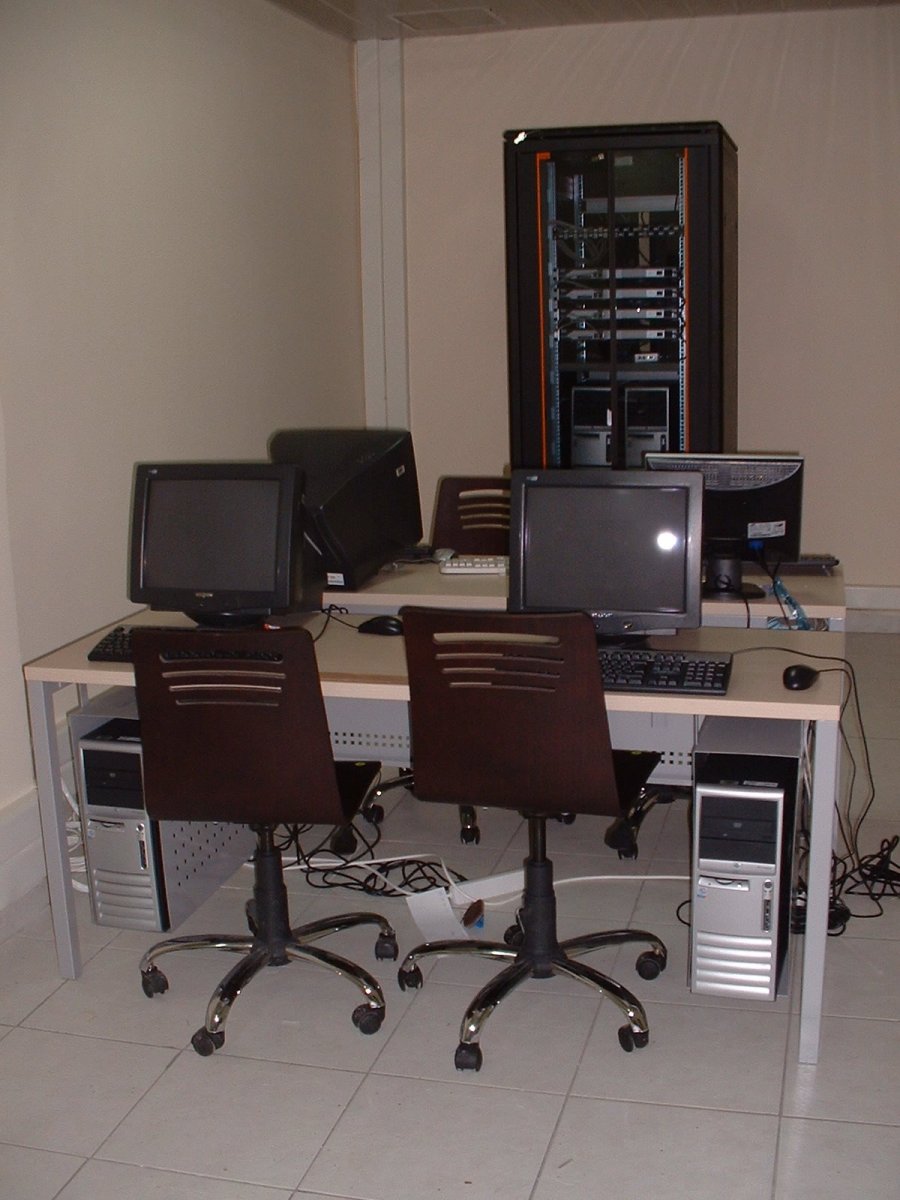
I founded the first hardware laboratory in the Department of Computer Engineering at Fatih University. The Network Laboratory consisted of two main laboratories: the Computer Networks Laboratory and the Wireless Networks Laboratory. It was designed primarily for undergraduate students while also supporting advanced networking research by graduate students and researchers. At the time, it was the first university network laboratory of its class in Turkey. Here is an interview about the Computer Networks and Wireless Networks Laboratories at Fatih University.
Computer Networks Laboratory. The laboratory was designed as a miniature version of the Internet. Each modular Internet rack contained four Cisco 2811 Integrated Services Routers, one 24-port 3Com or Cisco switch, four computers serving as Internet hosts, four Ethernet hubs, one KVM switch and its LCD monitor, keyboard and mouse, together with the required cables and connectors. Four additional Internet computers were associated with each rack-equipment unit. One rack-equipment set was used by four students. The laboratory contained six racks, and its modular and scalable design allowed future expansion.
Wireless Networks Laboratory. The laboratory contained two Internet racks, eight Internet computers, three notebooks, indoor and outdoor access points such as Cisco Aironet 1100 units and antennas, an ADSL network connection, and a USRobotics ADSL wireless modem supporting IEEE 802.11a/b/g/n. It also included mobile devices supporting GSM, GPRS, EDGE, UMTS, GPS, IEEE 802.11a/b/g/n, and Bluetooth technologies, Pocket PCs, smartphones, Crossbow Mote Sensor Network teaching kits, Dallas DS80C400 Networked Microcontroller Evaluation Kits, wireless-development kits, and related experimental equipment.
Enterprise Resource Planning (ERP) Project
Institution: Europe Software, Istanbul
Role: Consultant to the General Manager and Project Teams
Period: January 2004 – February 2005
Role: Consultant to the General Manager and Project Teams
Period: January 2004 – February 2005
I served as consultant to the General Manager and Project Teams and as a mentor on organizational structures and processes, technologies, project management and software-development processes, and enterprise-system architectures. I contributed to organizational structures and processes, interviews, technology and tool selection, team models, software life-cycle activities, standards, and documentation.
Consultancy also covered Enterprise and ERP applications such as Supply Chain Management, Human Resources, Product Management, and banking applications. Architectural issues included application layering, organization of domain logic, integration with relational databases, web-based presentation design, distributed-system design, and transaction management. Technologies included JSF, Hibernate, and the Spring Framework.
Automatic Sales Machine and Ticket Sales Machine Projects
Institution: BELBİM — Istanbul Municipalities Data Processing Industry & Trade Inc., Istanbul
Role: Consultant to Project Teams
Period: May 2003 – December 2003
Role: Consultant to Project Teams
Period: May 2003 – December 2003
I consulted the project teams on system architecture, technologies, and software-development processes at BELBİM. The AKBİL Smart Ticket System was a major integrated electronic-ticketing system enabling millions of Istanbul residents to travel with a single ticket across multiple transportation organizations and vehicle types.
This was a reengineering project that redesigned and reimplemented the existing Automatic Sales Machine (ASM) and Ticket Sales Machine (TSM) components using Java technologies, new development tools, and modern software-development processes. The ASM operated without a sales attendant and used a banknote acceptor, whereas the TSM was operated by a sales officer.
The ASM consisted of a personal computer, a Banknote Acceptor, a TOM read/write circuit, a monitor, a Vacuum Fluorescent Display, a printer, other hardware components, and a power supply. UML and an agile software-development process were used. Java and Borland JBuilder were used for implementation, while Borland Together was used for UML modelling and documentation.
Data Transfer and Automatic Integration Project — AKBİL Smart Ticket System
Institution: BELBİM — Istanbul Municipalities Data Processing Industry & Trade Inc., Istanbul
Role: Consultant to Project Teams
Period: May 2003 – December 2003
Role: Consultant to Project Teams
Period: May 2003 – December 2003
I provided consultancy to the project team on system architecture, technologies, and software-development processes for the Data Transfer and Automatic Integration project within the AKBİL Smart Ticket System.
IP Crypto Devices Management System (IPKC-YM)
Institution: TÜBİTAK-UEKAE, Gebze, Kocaeli
Role: Project Manager and System Architect
Period: May 1999 – July 2002
Role: Project Manager and System Architect
Period: May 1999 – July 2002
I worked as Project Manager and System Architect at TÜBİTAK-UEKAE. A management center and dedicated management-agent software for IP crypto devices were designed and developed. These devices were products of the National Research Institute of Electronics and Cryptology (UEKAE) and were used to establish Virtual Private Networks (VPNs).
The management-center software was based on Java RMI technology and ran on the HP OpenView network-management platform. The management agent was developed in the C programming language. Communication between the management center and the crypto devices was performed using SNMP messages. The five principal network-management functions—Fault, Configuration, Accounting/Asset, Performance, and Security Management (FCAPS)—were implemented for the IP crypto devices.
I served as the chief software architect for network-management and Java network-programming technologies. During this project, I also contributed to Turkey's representation in the NATO INFOSEC Working Group.
Institute and Project Management Process Improvement at TÜBİTAK-UEKAE
Institution: TÜBİTAK-UEKAE, Gebze, Kocaeli
Role: Project Manager
Period: August 2000 – December 2001
Role: Project Manager
Period: August 2000 – December 2001
I worked in institute-wide process-improvement teams. Research covered administrative and technical management processes, software-development and project-management processes, CMM, IEEE practices, SPICE, and agile methodologies such as Extreme Programming (XP).
TAFICS Electronic Key Management System (TELAYS)
Institution: TÜBİTAK-UEKAE, Gebze, Kocaeli
Role: Project Member and System Architect
Period: May 1997 – May 1999
Role: Project Member and System Architect
Period: May 1997 – May 1999
I worked as a project member and System Architect. A large TCP-socket-based distributed network application was developed for a Turkish military TCP/IP network containing SUN Enterprise/Ultra Solaris/UNIX and PC Windows NT computers distributed over a large geographical area. The cryptographic-key production and distribution center used Java and SDL technologies. I served as chief software architect for Java network-programming technologies.
Electronic Electricity Meter with Prepayment and Smart-Card Support
Institution: ELKOSİS — Federal Elektrik, Gebze, Kocaeli
Role: Co-Founder, Software Projects Manager, System and Software Architect
Period: September 1995 – December 1996
Role: Co-Founder, Software Projects Manager, System and Software Architect
Period: September 1995 – December 1996
A prototype electronic electricity meter with a prepayment feature, smart-card support, and a corresponding PC application was developed for Federal Elektrik. The hardware was based on the TI MSP430 and included current and voltage sensors, infrared communication, a smart-card interface, keyboard, and LCD display. A Windows GUI and database program were developed using Delphi and InterBase.
Development of Digital Signal and Image Processing Applications
Institution: Uludağ University, Department of Electronics Engineering — TÜBİTAK Marmara Research Center, Electronics Department
Role: Consultant and Software Developer
Period: September 1992 – December 1995
Role: Consultant and Software Developer
Period: September 1992 – December 1995
The work covered hardware- and software-engineering projects and digital signal- and image-processing applications. Microprocessors, microcontrollers, TMS320C25/30 DSP processors, and PC-based data-acquisition and I/O boards were designed, constructed, and used. C, C++, and assembly languages were employed.
AdEPar — Advanced Educational Parallel DSP Software Environment
Institution: Uludağ University, Department of Electronics Engineering, Bursa
Role: System Architect and Software Engineer
Period: September 1994 – April 1995
Role: System Architect and Software Engineer
Period: September 1994 – April 1995
As part of my Ph.D. research, I developed a block-diagram-based object-oriented Digital Signal Processing environment using Borland 3.1 OWL. DSP algorithms represented as Large-Grain Data-Flow or Atomic Data-Flow graphs could be described and simulated. The program distributed real-time DSP tasks among processing elements and generated parallel C or assembly code for target TMS320C25 processors.
Parallel Hardware Debugger for a Dual-Processor DSP System for Real-Time Control and Digital Signal Processing Applications
Institution: Uludağ University, Department of Electronics Engineering — TÜBİTAK Marmara Research Center, Electronics Department
Role: System Architect and Software Engineer
Period: September 1993 – April 1994
Role: System Architect and Software Engineer
Period: September 1993 – April 1994
A hardware-debugger program was developed using Borland 3.1 Turbo Vision C++ objects for a dual-processor parallel DSP system based on TMS320C25 processors. The target system had been designed and constructed at TÜBİTAK Marmara Research Center for real-time control and Digital Signal Processing applications.
Intel 196KC Microcontroller-Based Electric Welding Machine
Institution: Uludağ University, Department of Electronics Engineering — MİSTAŞ A.Ş., Bursa
Role: System Architect and Electronics Engineer
Period: March 1992 – September 1992
Role: System Architect and Electronics Engineer
Period: March 1992 – September 1992
I worked as System Architect and Electronics Engineer in a joint project conducted by Uludağ University and MİSTAŞ A.Ş. An electronic welding-machine control unit was developed using the 16-bit Intel 196KC microcontroller as the main processor.
Foundation of the Computer-Aided Electronics Design (BilDET) Laboratory and Hardware/Software Projects
Institution: Uludağ University, Department of Electronics Engineering, Bursa
Role: Founder and Project Manager
Period: September 1990 – May 1997
Role: Founder and Project Manager
Period: September 1990 – May 1997
I founded the BilDET (Computer-Aided Electronics Design) Laboratory and formed a student research team. The laboratory provided an environment for computer-aided electronics design and numerous hardware and software projects. During this period, I supervised approximately 15 senior design projects involving electronics, computer hardware engineering, microprocessors, microcontrollers, Digital Signal Processing, computer interfacing, and software development.
Galaxy Hardware Description Language (GHDL)
Institution: University of Wisconsin–Madison, Department of Electrical and Computer Engineering, Wisconsin, USA
Role: Software Engineer
Period: September 1988 – December 1989
Role: Software Engineer
Period: September 1988 – December 1989
As part of my master's studies, I developed the Galaxy Hardware Description Language (GHDL). GHDL was a core component of the Galaxy CAD Environment developed by Dr. John F. Beetem and his students. The Galaxy CAD Environment was designed specifically for digital-circuit simulation and also included a high-level programming language named Galaxy.
Using GHDL, digital circuits were described hierarchically. The program generated an output file containing circuit components and the associated netlist according to the Galaxy common-data-structure representation. This standardized format enabled the output to be used directly by other simulation tools within the Galaxy CAD Environment.
GHDL was adopted at the University of Wisconsin–Madison and several other universities in the United States and was later commercialized.